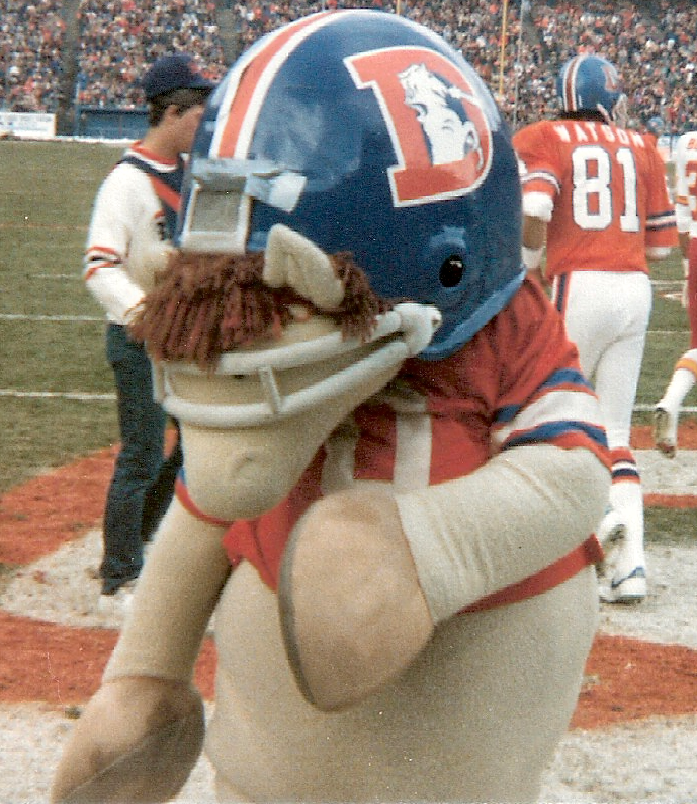
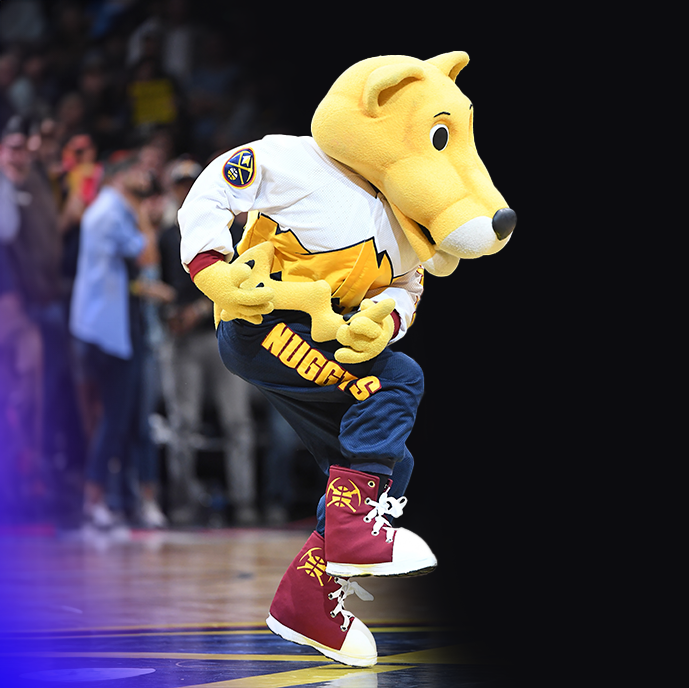
Arguably the best professional mascot ever, Kenn Solomon created and lived “Rocky” of the Denver Nuggets. I was also a mascot – at Drake University and for the Denver Broncos – and never was anywhere NEAR the caliber of Kenn, so I was thrilled when he agreed to join me on Stubbornly Young to talk about LIFE AFTER ROCKY. Kenn shares a lot that’s relevant to us all, including this excerpt: “I just dreaded the day that I had to say ‘I used to be…” I found this conversation so useful in framing up the mindset adjustment when we have to simultaneously accept that a highlight reel of our life is behind us – AND that we want more highlight reels knowing that they may never be as high.
FULL TRANSCRIPT
Kenn Solomon 0:00
I realized that when you got nothing left, just run, just run, run, Forrest, run. Just keep running. You just go and put one foot in front of the other, and things will happen for you.
Dave Tabor 0:14
Welcome to the Stubbornly Young Podcast for people in their 50s, 60s, and beyond who want to stay engaged in the world and relevant to the younger people in their lives? I’m Dave Tabor, and I started the Stubbornly Young podcast because I’m exploring the notion of middle age and moving beyond in a way that’s exciting and purposeful for me. I don’t want to get an old mindset, and I think a lot about that. I love podcasting, so why not offer what I’m exploring as a helpful guide, really, to share with others on this journey and those who want to stay stubbornly young. To that end, in this episode, I’ve asked Ken Solomon to join me. I think Ken is the very best mascot in the history of mascots, Ken created and lived the famous Rocky mascot for the Denver Nuggets. He’s known for crazy and risky antics, some that put him in the hospital. Hey, and some of you know that I was also a mascot. I was the Drake University Bulldog, and then the mascot for the Denver Broncos. But I was never look. I mean, never anywhere near as wild or awesome as Ken was as Rocky. Yes, we’re gonna talk about mascoting more. Though, let’s face it: those of us who are stubbornly young have lived a portion of our lives in ways that might feel, or even be considered, or come on, highlight reels of our lives that have already happened a long time ago, and that’s what we’re going to talk about today. When the highlight of our live, you know, of our lives may have already happened, how do we think about that, and how do we go forward? And look, I know the optimists of our group are going to say we’ll have new and we’ll have great highlights to come, and of course that is true, and I hope it’s true for all of us. But come on, Ken will never be the subject of adulation by 1000s every night going forward the way he was in the past. Look, we all have to reframe highlights going forward. So why not talk about that with someone who is the epitome of that path? So with that long introduction, Ken. Glad you’re joining me on Stubbornly Young.
Kenn Solomon 2:24
Ah, good to be here. I am honored. Yeah, this is great, and what a great concept, man! You’re hitting the nail on the head when it comes to transition at this older age, at this older place in our lives. So, man, good stuff. Good,
Dave Tabor 2:40
thank you. And and people I talk to about are like, yes, no one our age wants to feel like old. And I’m not talking about the physical stuff that lotions and potions and all that kind of. Like I’m talking about mindset. How do we stay relevant? How do we stay engaged to the younger people in our lives? But before we go there, we’ve got to spend some time talking about Rocky and you as Rocky. So give us some of the background about how that even happened.
Kenn Solomon 3:03
I started mascoting in high school, and then you know, and I found out that I was pretty good. People were coming to see me from you know they were driving. Word was spreading and stuff, so I thought I I might have something here. So I ended up getting a scholarship at a junior college in Idaho, and then once I figured that somebody would pay me, I kept going with it, and ended up getting a full ride scholarship at Utah State. And then while I was there, I was only there two semesters, and ended up in Denver with the Rocky Mountain News on an internship. And while I was here, I checked in with the Nuggets and called up Lisa Whittaker and said, “Hey, do you guys have a mascot? No. Can I show you a video? Can I, you know, I’m here. I am selling myself to her, and she was gracious enough to let me come in, show her a very lengthy VHS tape of all my stuff, and yeah, she was so nice. And then took me on a tour of the arena, and then just showed me the door. But I kept at it and ended up getting a call. I kept calling her all summer. When I say kept at it, I kept at you know just hounding her all summer. Honestly, it that was the I was used to that because high school they didn’t have a mascot. The first junior college I went to didn’t have one. They had just gotten a new costume, so I was their first guy. The next I went to Utah State, they didn’t have one. I had to really work for scholarship and the Nuggets. It was the same story. I
Dave Tabor 4:41
mean, who knew you could get a scholarship to be a mascot? I certainly didn’t have it, but I just did it for fun. It was and the parties. So yeah, right. So that’s yes. So I mean, that’s so cool that you sort of elbowed your way into getting this amazing career. So you know, here’s the thing. Like I talked earlier about highlight reels and. When you were doing it, when you were Rocky, did it feel like was it in your mind that this was like a life highlight reel that you were living? Ah, yes, you know, it had to. I mean, honestly, when I first got the job, I was ecstatic, and I thought I’d made it. This was my dream. I’m gonna get to live my dream, and I’m gonna get paid to play. That was my thing. I was not cut out for sitting behind a desk, and I wanted to do this so bad.
Kenn Solomon 5:30
So when I got it, I thought I’d made it, and then I was having a ball with it. But then, boy, struggles with making the transition from college to the NBA-that was a big change for me, and so struggles came right away. And then working through those, it ended up becoming a dream job. But yet realizing that it was a job, it was work, it was something that I was going to have to really pay attention to the craft. And then it became okay. I want to be the best, and how can I get there? I cannot just sit back and you know it’s just not me to sit back and just ride this train as far as it goes. I need to get up in the engine and start start driving this engine.
Dave Tabor 6:15
Well, you did some amazing things as I was preparing to have this conversation. I looked at some of the photos of you. I mean, way up high up on this crazy ladder, walking on stilts. Some of the things you did got you hurt.
Kenn Solomon 6:27
Yeah, yeah. My first serious ended with me in the hospital with a broken back, and that was just a dunk, but a dunk that went really sideways, real fast. Yeah, but I mean, you were
Dave Tabor 6:40
jumping off a trampoline to do this dunk, right?
Kenn Solomon 6:43
Yeah, yeah, and the trampoline slid, and there’s some factors that I didn’t account for. From then on, I had people hold my trampoline, and but I ended up breaking my back and ended up in the hospital. And it’s funny, I thought at that point my career might be over, or at least, I might have to adjust things in the future. I don’t know. I didn’t know how that was going to end up, but yeah, I’ve had broken back. I’ve had broken heels from jumping off the rim. Dumb, yeah, broken just about everything. Teeth. I mean, yeah.
Dave Tabor 7:17
I mean, you have to commit. Oh well, and I heard Charles Barkley knocked a tooth almost out. So was it Charles Barkley did that? Yeah, yeah, yeah. Yeah, playing around. So I mean, these are things like, is you? It’s great when you’re in your 20s, even 30s, you’re doing this kind of stuff. And at some point, were you in like in a game one time with the Rocky head on, thinking, you know, either I don’t know how much longer I want to do this, or I don’t know how much longer I can do this. Did you start thinking about life after Rocky while you were still being Rocky?
Kenn Solomon 7:52
You know, I did. Yes, I thought about life after and what I would do, but I was so wrapped up in it. You know, my first goal was to be there long enough, you know, until my kids graduated high school, and then after that, it was getting them through college, and after that, it was-I mean-I just kept going, and you know, I lived and breathed this character. There was, I did have some wake up calls, and I’m so blessed to have these wake up calls. You know, sometimes we have things thrown at us that we think are going to ruin us, or that are going to take us down, or that are going to change the rest of our lives, and really dramatic things. I had a situation back when the recession hit, and it was unfortunate and fortunate at the same time that my contract had come up, and it was time to renegotiate. And they handed me a new contract. They slid it across the table and said, “Well, this is your new deal. And I looked at it, and they had cut my salary by a third. Wow! I was like, “Oh, wow, that’s kind of interesting. So, okay, I’ll get back to you on this, and I’ll counter that. And they said, “No, no, you don’t understand. This is your new contract. If you don’t like it, this is the way they put it to me. We just let go 27 people. and so you’re lucky to be here. If you don’t want to be here, we understand. We’ll get somebody to come in and take your place for half, at least.
Dave Tabor 9:36
Probably, yeah, yeah,
Kenn Solomon 9:37
right. And I was, gosh, I was really bothered by that, and I my pride just almost got the better of me, and I ended up tucking my tail, and that was a good wake up call for me in the sense that I had to start thinking about life after. I had to. I just. Realized at that point, without losing my job, that I had to figure out something for life after. And at that point, I buckled down, still did my job. I swore, but just a little tidbit of info in my pride. I thought, you know what? You’re going to cut my salary by a third. I’m going to cut my performance by a third. Yeah,
Dave Tabor 10:23
you didn’t do that at all, did you?
Kenn Solomon 10:25
Oh my gosh! For about two games, I gave it about two thirds the effort, and it was exhausting trying not to be myself. And I just like, yeah, you know what? What the heck? I’m just still gonna go crazy. But I did spend every waking hour for a long time working on stuff outside and trying to set myself up. And I had another situation that was really an eye opener for me. I had a new assistant that was a former player, Mark Randall. What a blessing that guy was in my life. They added to his responsibilities because they were shifting all kinds of things around because they had let 27 people go. So they wanted to keep him on, and I became part of his world as well. So he was going on every appearance with me. He was great, though. He said that he would represent me as best he could, and he did. He swallowed his pride as a ex player and a guy that just stood out everywhere he went to kind of be in the shadows for me, and which was a huge lesson in the first place for me. But then one day he took me aside and he goes, “You know, you need to understand something. And I don’t remember the circumstances exactly, but he recognized that I was being a little, a little bit of a diva in a few situations, and he says, “Hey, man, can I talk to you? He pulled me aside and he goes, “You know, you’re great, yeah, but you’re not Rocky. First of all, you’re not Rocky. You’re Ken. and you need to realize that as soon as you’re done, you’re done. Just like an NBA player, you know you’re nobody unless you’re a superstar like Michael Jordan or somebody like that.
Dave Tabor 12:16
When he said you’re done, you’re done. What’s coming to mind? Yeah, but what’s coming to mind is that you know? And I shared with you right before we got started that last week I had my last day of employment, and people have often said, “Oh, you know, when you’re done, you know, you’ve got all these contacts, all these people. I’m like, you know, I don’t think so. I mean, our identities kind of change and shift, and we can either hang on, or we can hang on to what was, or move forward. I mean, what’s your take? I mean, to what extent now that you’re no longer in the suit, to what extent you know is your persona still rocky, or and to what extent have you put it behind you?
Kenn Solomon 12:55
Well, it’s all behind me, actually. All right, here behind me. I’m looking at your at your studio, yeah, yeah, yeah. I know,
Dave Tabor 13:03
but you know, I have to be. I got you know what comes to mind. What comes like there’s all these stories and people talk about like the high school quarterback who peaked in high school and then spent the rest of his life looking back, you know, and never really, you know. So like, how do you? It is all behind you, and it’s wonderful to have that in your studio. But how do you think about yourself now going forward?
Kenn Solomon 13:26
To be honest with you, it’s been a huge adjustment, and it’s been a huge adjustment for my family. It’s all my kids ever knew. I’ve got a son that’s in the NBA, and he’s with the Pistons, so he’s the mascot for
Dave Tabor 13:40
them as a mascot, as a mascot, not a player, right? Yeah,
Kenn Solomon 13:43
mascot. Yeah, yeah. And so he’s Hooper, and then my middle son, who we can’t talk about too much here because he’s in some legal things with the franchise, the Nuggets. But he took over for me, and he did very well. But you know, it was interesting. You know, as we all stepped away, how we all had to deal with this differently, and pretty much at the same time, we were all going through our different different aspects of things that we missed, and so it’s been kind of a family adjustment. And I was lucky to start directing my attention before I was actually done into other businesses, and there’s no retirement in the NBA, so I had to figure
Dave Tabor 14:32
out
Kenn Solomon 14:33
funds for yeah. There’s no
Dave Tabor 14:36
pension for mascots.
Kenn Solomon 14:37
No, no, not in the NBA in the NFL, yeah. However, the change has been difficult. However, I’ve found that I’m okay. My identity is not what I wore; it’s who I am, and I can be just as fun and. Sociable and things like that. I’m not entertaining that many people every night, but I’m actually still freelancing. I’ll be in London at the end of the week. I’ll be performing next week in London and as Rocky, no, as another character, and then I fly from there to Croatia, and I’ll be out there for two weeks performing as another character. And I’ve been all over Europe. I’ve been all over the states in different characters. I’ve been in commercials that you’d know right now as another character. So I still actually have a an outlet for this creativity, and still in this gig in London, my two younger sons they’re going to be over there performing with me and working with me and things like that. So I’m still doing stuff that I enjoy that I was built for. I believe that I have a talent that’s going to continue and evolve, and you know, you said the optimists always say, “Oh yeah, well, we’ll keep going on and having special moments and things like that in different ways. Keep building, yeah,
Dave Tabor 16:11
keep building highlight reels, yeah. But I mean, come on, it’s nice you’re getting paid to do what you love. It doesn’t feel the same, does it? As like I’m going to get in and do some consulting and around things I know, but you know it’ll be helpful, and I I look forward to doing it. But I, you know, it’s not going to be the same juice, you know, coming in as sort of doing it live at the top of my game. Do you feel that difference?
Kenn Solomon 16:34
Yes, yes. It’s interesting as I am these other characters. It’s humbling to walk in, and you know, in front of a new crowd, and there’s not the roar when you walk out of the tunnel. And, however, it is a challenge for me to create that energy and to create. You know, by the time I’m done, to have this. However, in a way, it’s nice because I don’t have the pressure either.
Dave Tabor 17:07
You know, I wanted to explore a little bit because whether a listener was president of a company or an entrepreneur or a business owner or whatever they were doing when they were at the peak of their game, you know, people knew them as what they do at the peak of their game. You know, you go to a party. What do you do? And if you go to a party and someone doesn’t know your history, somebody says, “Well, hey, Ken, tell me what you do. You’re like, “I used to be X. Like, how do you manage that?
Kenn Solomon 17:39
Yeah, and I really thought about this before I was done. I thought, how’s that going to be? And I just dreaded the day that I had to say I used to be. And it was interesting. I just I moved down to Fort Worth, and so I am in Fort Worth now, living, and so I don’t even have the connections. You know, everybody knew me at the tire store. The you know the whatever everybody knew me, and here no one knows me. Go to church, no one cares. Boy, I used to be a celebrity walking into church, you know, and all the kids want to talk to me afterwards and and everything, but I think it was tough at first, and I’ve been through tough times, been through some really dark times, even when I was in costume, some really dark times, and because of those times, I feel like you know what. This is something that, first of all, doesn’t compare to those times, but it’s also good for me. Why is that? It’s good for me to completely be removed and not ride on the past. Nobody ever wants to be the jock that hangs out after school, you know. And to move was scary. It was intimidating, and and those things. But I realized that it’s good for me to push myself outside my comfort zone. By doing so, I have grown. I’ve had to reach out and make friends, make connections, be me, express myself from within here, pull out what my personality is, not what people used to see me as or know me as, and it’s really been a stretch for me.
Dave Tabor 19:49
Is it tempting to just when you’re meeting new people or doing new things to say, you know, well, I used to be Rocky. I mean, is that is that tempting?
Kenn Solomon 20:00
You know, yes, yes, it is, and I’m trying not to. At first, gosh, when I first moved here, my next door neighbor was helping me move in, and I blurted right on out, and I realize I just sound like an idiot. I sound like that guy hanging around the school, and then the guy shows up at my door. You know, the guy that mows everybody’s lawn in the neighborhood. You know, he shows up, knocks on my door, and hey, where are you coming from? Colorado. Guess who I used to be? And I didn’t say it that way, but I just realized I was being a goof. And tell you one other thing is now I’ve gotten to the point where like these people called me because they know somebody I was recommended by this group in Birmingham, England, and so they call me and say, “Hey, could you develop a character for us and be the character for this event, and we’ll fly over for all these other things and whatever. It was interesting. She texted me the other day. This lady that’s organized all this and and called me and everything. She texts me the other day, and she goes, “Is this you? And it was a video of me doing a half court shot, back my backwards half court shot. I’m like, yeah, that’s me. So she hadn’t even realized who I was or what I’ve done. It’s been a lot of fun, you know. Actually, stepping back and just letting things happen, letting the river flow a little bit. Okay,
Dave Tabor 21:34
so you stopped and you were saying something when she asked you, and she said, “Is this you? You couldn’t decide whether you were going to say yes, that’s me, or that was me. So, like, which
Kenn Solomon 21:49
is it? Wow, deep question there. I don’t know if you realize that, but for a long time, I would interchange the way I referred to Rocky between second person and third person, first person. I used to refer to myself first person saying, “Okay, then Rocky’s going to go do this, and then Rocky will do, you know, Rocky, you know, Rocky, Rocky. And they’re like, “You’re talking about yourself, right? Like, yeah, you know. So I was Rocky. Rocky was me. What you saw was my personality, just pushing through the costume. And a lot of times, what I saw in the mirror was Rocky. Weirdly enough, so when she texted me that, I just replied with “Yep, and I sent her my Instagram because she hasn’t done any homework.
Dave Tabor 22:49
Oh, that’s probably what made you so good at what you did. When I was well, unfortunately, when I was mascot, it was this horrible big beast of a horse. Ah, I know. Long time ago, you remember this guy too much? It was
Speaker 1 23:02
yes.
Dave Tabor 23:03
Oh, brutal! But I will say that the way I acted when no one could see who I was was way more liberated than I actually behaved day to day. And in your case, it was the opposite. It was like bringing you out. Maybe it’s because a you had all those gymnastic skills, b you’re just better, and also the costume was designed so you could actually move. So all of those things, but I remember it’s like the opposite. I had to feel free because no one could see me. You’re so right. There’s a change that happens, and if you’re any good at all, there is a change that happens, and you you get to be bigger than life, and your personality gets to be bigger than life, and the things that you wouldn’t normally do, like yeah, you just wouldn’t do those things. Being a mascot is being the guy that everybody wants to be but can’t be. So, are there parallels? Because not everybody listening, in fact, hardly anybody listening, has been or will be a mascot. There are people of all sorts of professions and backgrounds, right? So, do you think as you’ve sort of made the slow transition from Rocky to who you are now and what you do now, which includes being a professional mascot. But you meet people along the way of all kinds of prof. To what extent do you think there are parallels between the transition that you’ve gone through, leaving Rocky behind to some extent, to a lot of extent, or finding whoever you are now separate from that identity. Do you think, as you’ve met other people, there are parallels? Oh, absolutely, absolutely. You know, everybody knows the person that retires and just stops, and
Kenn Solomon 24:57
and they go downhill, or they get depressed, or. Whatever, and you know, I feel for those people, but I think there’s parallels. I see people go through this, or are going through this. I’m going to come around to something here. But first of all, mascotting. You said you know there’s not a whole lot of us out there, right? Unfortunately, for some of my colleagues, after a long career, they were let go, and I tell you what, it is such an emotional. I mean, it’s one thing getting fired from a job that you know you’re into and everything, or not into whatever. Getting fired is tough. Having to retire is tough. People in my business, when they get fired, it is tough because it is such an emotional attachment to that character, and because it is, it becomes part of you. So it is like somebody’s ripping a limb off, or it’s losing a part of you. And I think that a lot of people that run big companies that are somebody, somebody who they think is somebody, or people think that they’re somebody. It really does affect you mentally, emotionally, spiritually, and I think that I’m writing a book right now, and one of my chapters is all about this. So I’m going to bring it up. Not trying to sell my book or anything, but I think this is so important for people to know and to understand and to grasp that you know at some point you feel like you got nothing left. Your back’s against the wall. You’ve given everything you’ve got. What else is there? And I relate this to my character and having being called on so many, so many, so many times in a game to go out and entertain when there’s time out after time after timeout, and you get exhausted, and you got nothing left in the bank, you know, nothing left in your pocket to pull out and and entertain with, and I remember a long time ago them just calling my name, go go go. Now it’s overtime, you know. It’s time out after time out. Send Rocky, send Rocky, send Rocky, send Rocky, and finally it’s just like yelled to my assistant, “What? What do they want? What do they want me to do? I’m out of stuff, and I finally just got to the point where I was like, “Screw it! I’m just going to run, and I just ran out on the court, and inevitably something happened. And every time after that, something would happen where, you know, you just somebody would catch your eye, or I use this this idea or this example all the time. There was one of the ladies out there that very wealthy sees a ticket holder. She’s still there. Run out and she’d have a fancy some shiny shoe on. I’d run over and grab it and throw it onto the court, and she’d have to go chase it. Where I mean, there’s there was something would happen that would whatever, and then sometimes nothing would happen. But so I just keep running across the court. I’ll run out the other side, and but it was still entertaining. People were like, “Why did he just run up? He just he just ran out the other. What what was that? And it was something. Even if we lost, that they could go home going. Ah, that was that was funny. That was kind of screwy. But I realized that when you got nothing left, just run, just run, run, Forrest, run. Just keep just keep running. Really, I mean, like you just go and put one foot in front of the other, and and things will happen for you.
Dave Tabor 29:07
You know what? I started this this episode talking about how many of us, at least I do, and people I talk to, you know, they look back on their lives and they. It’s not hard to realize that like something we’ve done in the past might be the highlight of our life, and that it’s unlikely that the highlight is before us. I mean, the biggest thing in our life may not be before us. Maybe it is. You know, maybe you shift from being you know excited over the moon about being rocky to being over the moon about grandchildren or something, right? I mean, it’s different. But I mean, how do you contextualize that when your highs were so high and you’ve got the rest in front of you? How do you put that in perspective? After I lay on the couch for two weeks and just eating cereal and
Kenn Solomon 29:59
pop. Pills and no, you know I just turned 60 in July, and 60-that’s a big deal, and I have to laugh because I may have the biggest things behind me, but I’m trying every day to not only run and push and everything. I’m writing a book. I’m working on another really big project that I gotta make happen. I have to for myself. I have to keep pushing. I have to keep achieving. I have to keep setting goals. It’s in my nature, first of all. But are there times when I get sad and reminiscent? Yeah. Oh yeah. So especially looking at old videos and highlights and stuff like that, you wonder if people will remember you. There’s some guy that in my costume right now. There’s some guy in in me right now, you know. And I worry: is he does he appreciate it? I don’t know.
Dave Tabor 31:16
I suppose everybody who leaves their career at a high point, you know, and see somebody just come along and backfill it in. You know, it’s like life keeps going. Life
Kenn Solomon 31:28
goes on. Life goes on.
Dave Tabor 31:30
Yeah, yeah, and yeah.
Kenn Solomon 31:31
And you think, will I be remembered? Do I have any kind of legacy? What’s or and what that is, and and everything. You know, I met this comedian the other day. I went to this show. Maybe my wife did, and afterwards I met the comedian. Part of what he talked about is how you know he’s later in life now. He’s been in the business 30 years and all that. And he said, “I think this is so wise that he is now adding commas to his headstone, to his obituary, and when I met him in person, I said, “Hey, I appreciate that comment. He goes, “Man, just keep adding commas. He was a mascot. He was a philanthropist. He was a you know so you know keep adding commas, keep learning, keep adding commas.
Dave Tabor 32:29
What a great mantra! Yeah yeah, I had a couple that were my guests many episodes ago on stubbornly young who co-wrote a book called The Experiential billionaire, and the idea that you know life isn’t a steady beat of the drum. You know we punctuate it with wonderful experiences. You had a prolonged one. My experience as mascot was short, but it was a highlight in both of them actually at Drake and then at the Broncos. But these punctuation points, you know, is a different way to think about it, and you know, you and I going forward can have lots more of these experiences to create highlights. In fact, I built a spreadsheet and I started reminiscing what were highlights, what were experiences that made me feel rich in my life, and some were bigger than others. But it was kind of a cool way. It’s kind of what you were saying. Keep adding commas, you know.
Kenn Solomon 33:23
Yeah, there’s so much more to life, and I think that you can still have an impact. One of my things is I still want to have an impact, and people are asking me why I’m doing what I’m doing still, and they ask me about all these different things that I’m doing, and it’s because honestly, I still feel the need to continue to have an impact. And whether it’s you know because I do public speaking now, that is so rewarding. I’m telling you, and I’m talking to high school kids, and I’m talking to adults, and you know a lot of it is centered around mental health. You know, I just spoke to a Parks and Rec group in Colorado Springs, and it’s interesting. People are in so many different places in their lives on this journey with pain, with success, with challenges, and you know, a long time ago, I felt very strongly that the crap that I was going through in my life-I mean, there was one thing in the news that people picked up on and ran with, which was a real low light in my life and career and everything, but I talk about that, and but at that time in my life, I had a very strong impression that all the craziness, all the hurt I was feeling, and everything was all for a reason, that it would benefit. Not only my kids, but others in the future, and so yeah, I’m doing what I can to still impact.
Dave Tabor 35:11
I think that’s cool. So my last thought before we kind of wrap up is, I know you do work with your sons, and one of the, you know, as I describe stubbornly young, the idea is part of the reason is I want to stay relevant to the young people in my lives, and particularly my sons. Sort of running from a mindset of old, you know, was really important to me, and finding ways to relate. You’re working with your sons all the time. I mean, how important is that to you? Well, thank you for asking. First of all, me and my boys have always been close, really close, and I think that is such a blessing. And I think that they, you know, I always say they turned out really good, just you know, in spite of me. And I’ve been very fortunate;
Kenn Solomon 36:01
they’ve enjoyed working with me for the most part. It’s still dad sometimes, and you know when I get on my lecture pedestal, whatever that is, my podium, it’s definitely father son stuff. But it’s been a real blessing. But you’re right, you know, you go through those. How do I stay relevant? How do I stay cool? You know, how do I hold on to that relationship? But I don’t think, for me, I don’t think you have to worry about it. I think if you just be yourself, that’s really what people want from you, you know. People don’t want you to be trying.
Dave Tabor 36:45
I’m glad you said because I think my sons would both say, “Dad, you can give up trying to be cool.
Kenn Solomon 36:51
Right, because they really do think you’re the man.
Dave Tabor 36:56
Oh, I’ll tell you a funny thing. Yeah, I was going to lease this Kia electric car, which I did, and I texted my boys like guys want to get. I don’t know whether to get the blue or the red, but if I get the red, I don’t want it to look like you know I’m trying for midlife crisis or whatever. My older son texts back, Dad, it’s a Kia. So yes, no midlife crisis. Don’t worry about it. Yeah, yeah, Corbett. I know, I know. So
Kenn Solomon 37:25
you know, what do you do to stay in the groove and stay young yourself? What do you? What do you do?
Dave Tabor 37:33
I do think it really is about a mindset kind of a thing. So I do try to stay physically fit, and I think that helps to sort of invigorate my mind. I’m using AI pretty extensively now. I think that helps. I was just at a wedding last weekend where I failed miserably because all the 20-somethings and early 30s are up there dancing, and they know all the lyrics to this stuff. I don’t know any of it, and so I’m going to have to start listening to Spotify Top 50 is what I was told to do in order to not feel completely lost at these things. In fact, my wife and I watched the first part of that Netflix K-pop movie about I don’t know. It’s all the music with. Gosh, now I’m being dumb here. But anyway, you probably know which one it is. The Demon Hunters. That’s what it is. You know, just doing little bits of it’s like I’m not being lost in today’s world is really important?
Kenn Solomon 38:21
Yeah, yeah, and at the same time, though, I I just don’t want to have to worry, and I try to tell people all the time, don’t worry about you know knowing all the stuff that the young guys know because
Dave Tabor 38:36
yeah, yeah, yeah,
Kenn Solomon 38:36
you know stuff that they don’t. You know stuff.
Dave Tabor 38:41
I appreciate that reminder. Yeah,
Kenn Solomon 38:44
I have to tell you something funny. The other, this was about a month ago. I was at this highfalutin party where Nelly was actually performing at. This was at a guy’s house.
Dave Tabor 39:01
Wow,
Kenn Solomon 39:02
and Nelly. there, and it’s outside, and everybody’s in suits, ties, and you know it’s kind of one of those hoity-toity parties. But the guy had an in-ground trampoline over there. I’m like,
Speaker 2 39:20
oh,
Speaker 1 39:21
Jennifer, watch this. She’s like, no, no, no, no, no, no. You’re not. I’m, I’m sure you’re not supposed to be on this trampoline. I’m like, I gotta,
Kenn Solomon 39:32
I gotta. So I went over there in my suit. Nelly is like 100 feet from me, and all these people are, you know, I’m just off to the side, and I go over there, start jumping, I do a backflip, and I land it. There’s these young guys, like, I mean,
Speaker 1 39:55
1819, 20, maybe, and they turn around. They’re like, oh. Oh my gosh! They’re like, dude, you still got it. Oh my gosh! I’m like, yeah. I must look really old to you. I must look really old.
Dave Tabor 40:12
Yes, you still got it. Oh god, is that good or bad? I don’t know. I didn’t know. I don’t know either. Anyway, I, I know. Well, let’s look. We’ve gone way over, so we should wrap up. You think? But we can get back in touch. This is episode 25 of Stubbornly Young, and I’ve been so happy to be talking with Ken Solomon. Thanks for joining.
Kenn Solomon 40:34
Thank you, Dave. It’s been an honor. Appreciate you. Keep doing what you do. Been
Dave Tabor 40:38
fun, and oh, I’m going to listeners stubbornly young is for people in their 50s, 60s, and beyond who want to stay engaged in the world and relevant to the younger people in their lives, in whatever that is, even without trying too hard, right, Ken? So, but anyway, keep listening. If you know people who are stubbornly young who ought to be listening, please share this podcast with them. Please rate it in your app, and I guess we’ll call it there, Ken. Thanks, listeners, for joining us on Stubbornly Young.